Chapter Overview:
India is one of the 12 mega bio-diversity countries of the world. With about 47,000 plant species and
90,000 animal species, our country is rich in flora and fauna. In this chapter, we will explore the
different types of vegetation, the factors affecting them, and the wildlife they support.
1. Introduction
- Natural Vegetation (Virgin Vegetation): A plant community which has grown naturally
without human aid and has been left undisturbed by humans for a long time.
- Flora: Plants of a particular region or period.
- Fauna: Species of animals.
- Endemic Species: Virgin vegetation which are purely Indian (Indigenous).
- Exotic Species: Plants which have come from outside India.
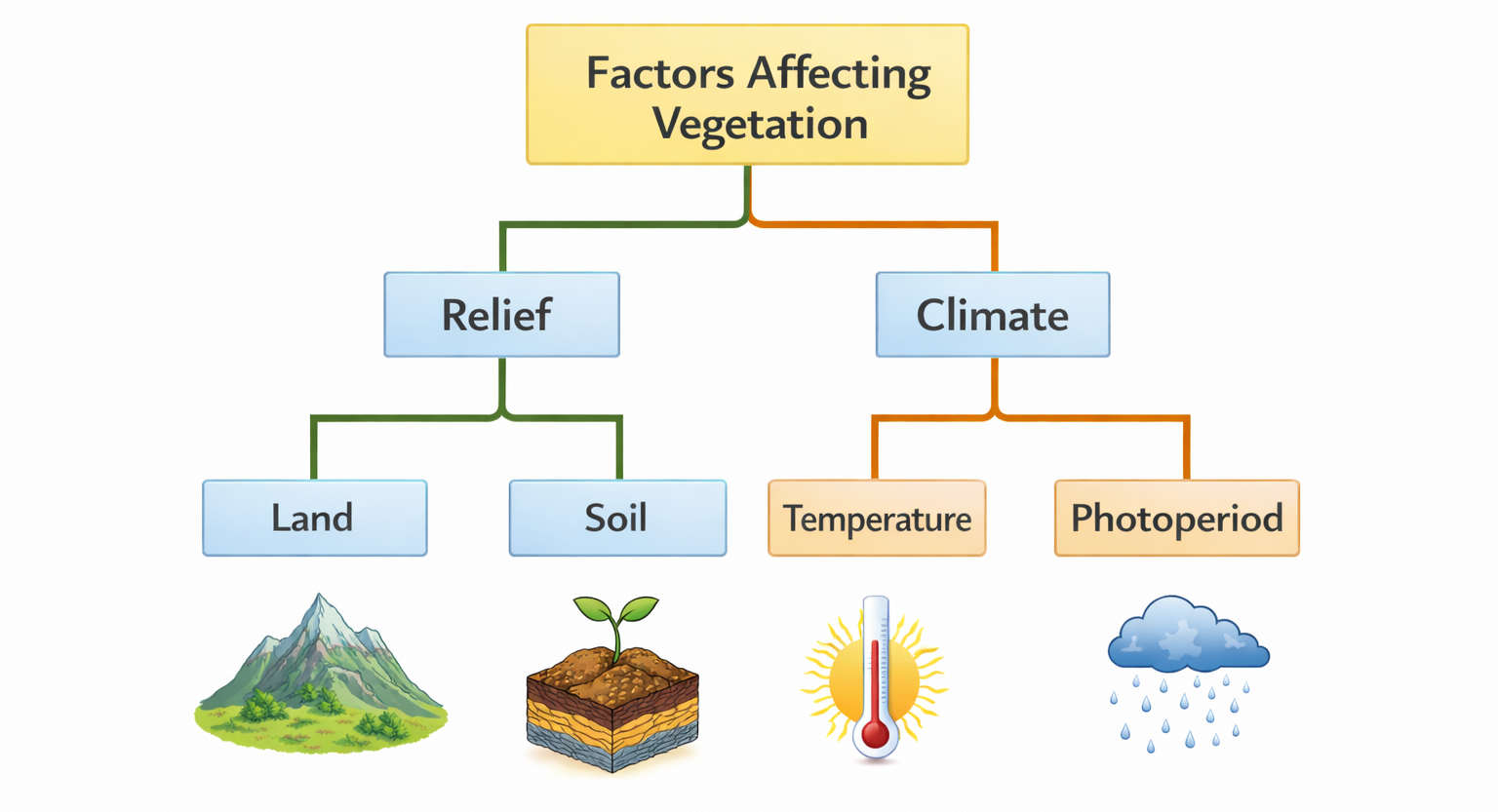
2. Factors Affecting Vegetation
(i) Relief
- Land: Affects natural vegetation directly and indirectly.
- Level Land: Generally devoted to agriculture.
- Undulating/Rough Terrain: Areas where grassland and woodlands develop and give shelter
to wildlife.
- Soil: Different types of soils provide basis for different types of vegetation.
- Sandy Soils (Desert): Support cactus and thorny bushes.
- Wet/Marshy/Deltaic Soils: Support mangroves and deltaic vegetation.
- Hill Slopes (with depth of soil): Support conical trees.
(ii) Climate
- Temperature: Character and extent of vegetation are mainly determined by temperature
along with humidity in the air, precipitation and soil. (e.g., fall in temp affects vegetation type from
tropical to alpine).
- Photoperiod (Sunlight): Variation in duration of sunlight affects growth. Trees grow
faster in summer due to longer duration of sunlight.
- Precipitation: Areas of heavy rainfall have more dense vegetation as compared to areas
of less rainfall.
3. Ecosystem
Ecosystem: A system formed by the interaction of a community of organisms with their
physical environment.
Biome: A very large ecosystem on land having distinct types of vegetation and animal
life. Biomes are identified on the basis of plants.
4. Types of Vegetation
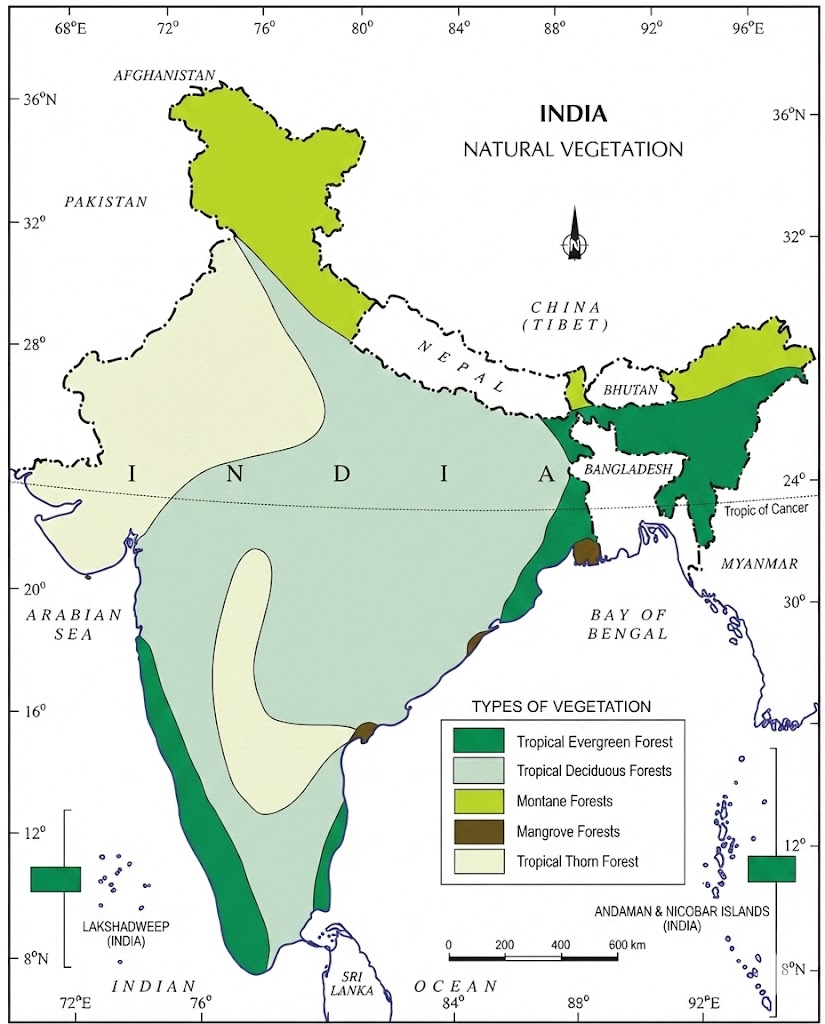
The following major types of vegetation may be identified in India:
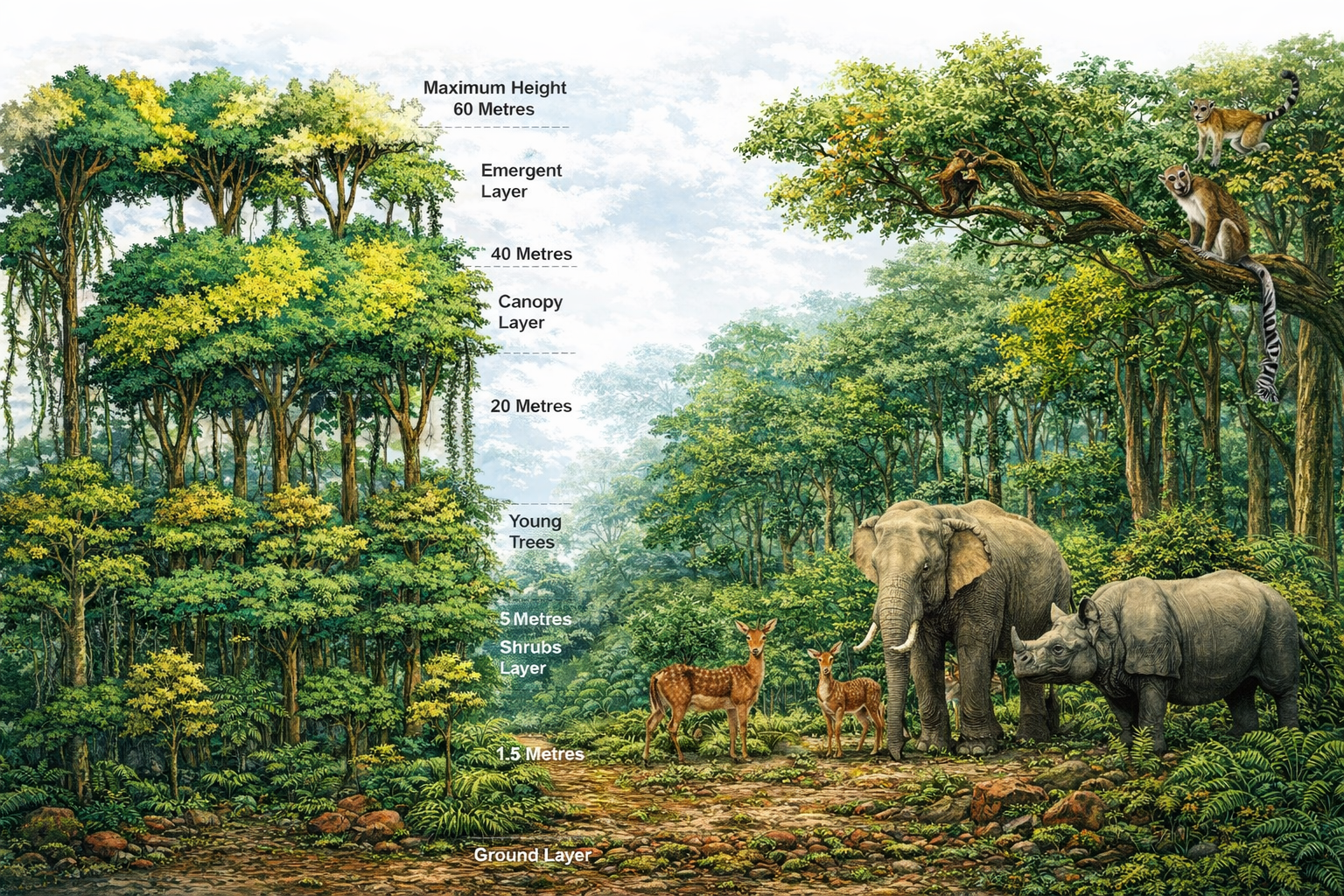
(i) Tropical Evergreen Forests (Rain Forests)
- Region: Heavy rainfall areas of Western Ghats, island groups of Lakshadweep, Andaman
and Nicobar, upper parts of Assam and Tamil Nadu coast.
- Rainfall: More than 200 cm with a short dry season.
- Characteristics: Trees reach great heights (up to 60m). Multilayered structure
(creepers, shrubs, trees). appear green all year round.
- Flora: Ebony, Mahogany, Rosewood, Rubber, Cinchona.
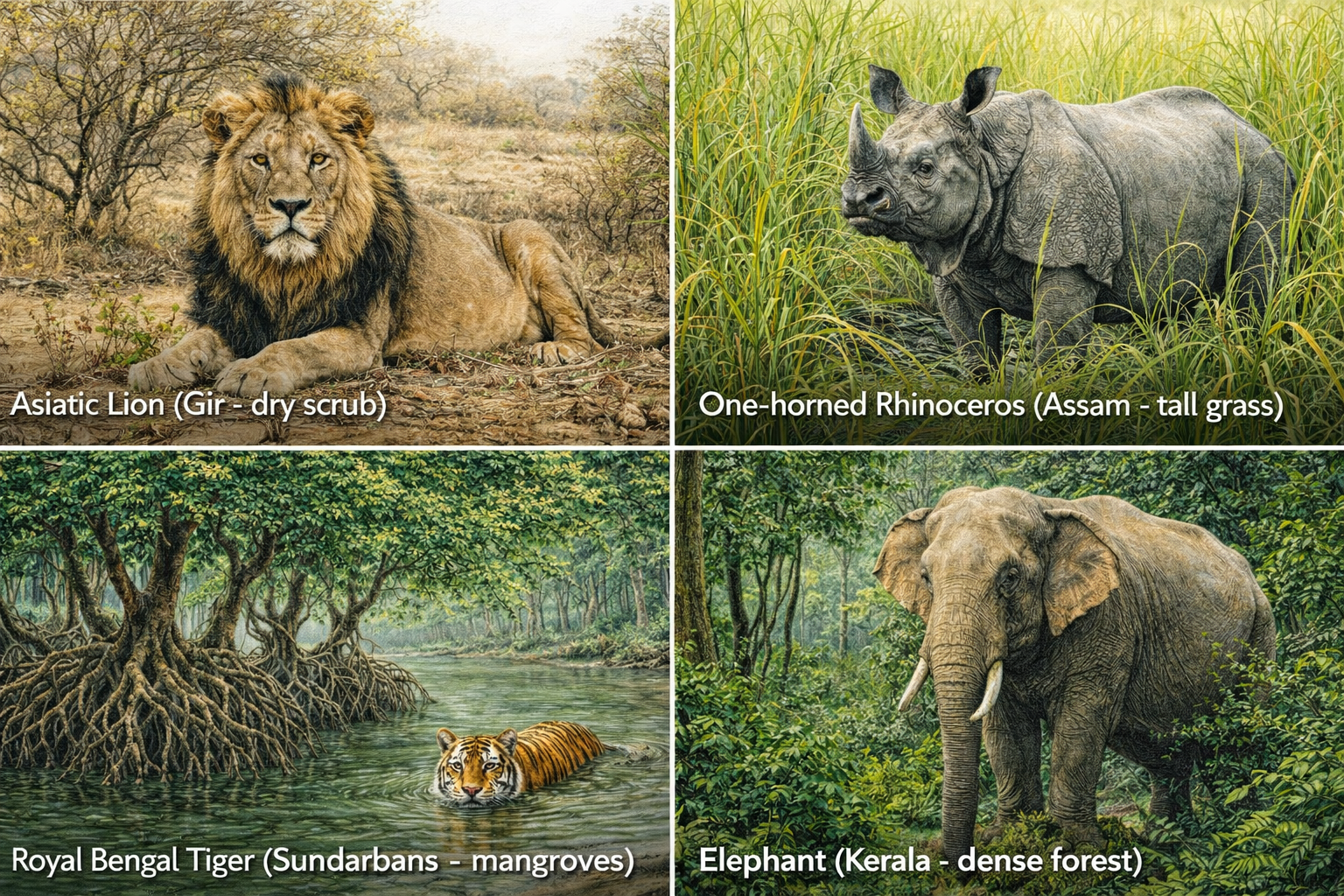
- Fauna: Elephants, Monkey, Lemur, Deer. One-horned Rhino (Assam/West Bengal).
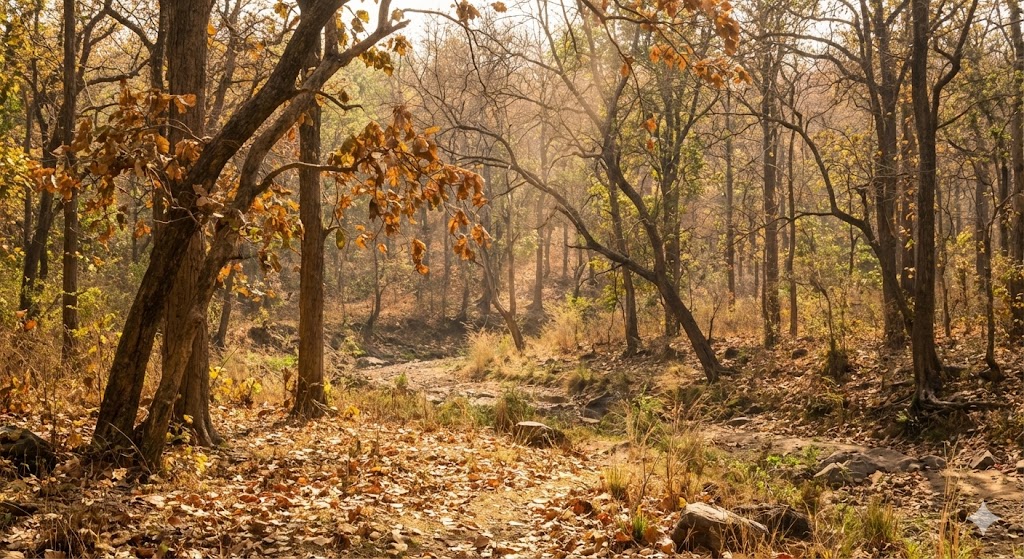
(ii) Tropical Deciduous Forests (Monsoon Forests)
Most widespread forests in India.
- Rainfall: Between 70 cm and 200 cm.
- Characteristic: Shed leaves for about 6-8 weeks in dry summer.
- Types:
- Moist Deciduous (100-200cm): Teak, Bamboo, Sal, Shisham, Sandalwood. (Foothills of
Himalayas, Jharkhand, West Odisha, Chhattisgarh).
- Dry Deciduous (70-100cm): Teak, Sal, Peepal, Neem. (Plains of Bihar and UP).
- Fauna: Lion, Tiger, Pig, Deer, Elephant. Variety of birds, lizards, snakes.
(iii) The Thorn Forests and Scrubs
- Region: North-Western part of country (Gujarat, Rajasthan, MP, Chhattisgarh, UP,
Haryana).
- Rainfall: Less than 70 cm.
- Flora: Acacias, Palms, Euphorbias, Cacti. Trees are scattered. Roots penetrate deep.
Leaves are thick/small to minimize evaporation.
- Fauna: Rats, Mice, Rabbits, Fox, Wolf, Tiger, Lion, Wild Ass, Horses, Camels.
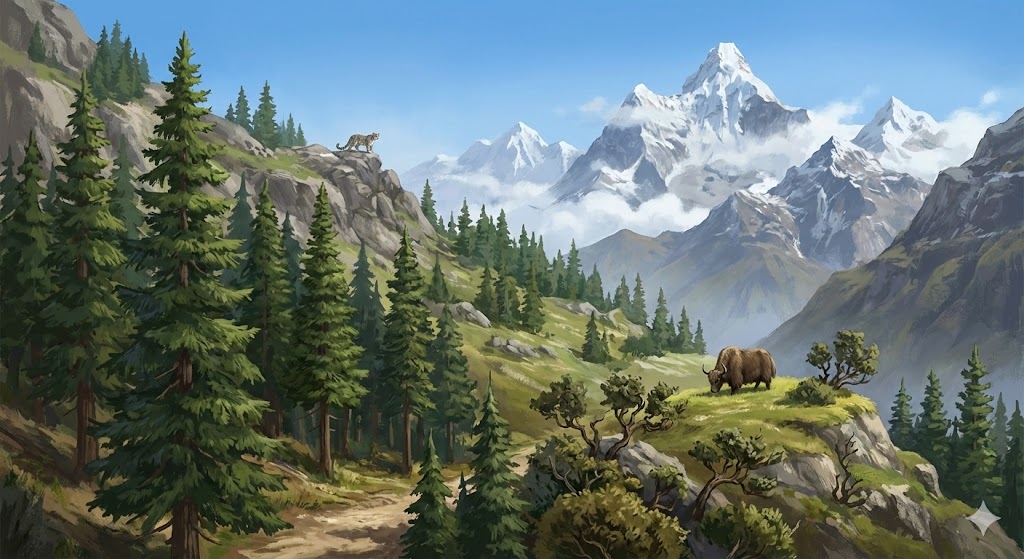
(iv) Montane Forests
Vegetation changes with altitude in mountainous areas (decrease in temp):
- 1000m - 2000m: Wet Temperate forests. Evergreen broad-leaf trees (Oaks, Chestnuts).
- 1500m - 3000m: Temperate forests. Coniferous trees (Pine, Deodar, Silver fir, Spruce,
Cedar).
- > 3600m: Alpine vegetation. Silver fir, Junipers, Pines, Birches. (Used by
Gujjars/Bakarwals for grazing).
- Tundra Vegetation: At higher altitudes, mosses and lichens.
- Fauna: Kashmir Stag, Spotted Dear, Wild Sheep, Jack Rabbit, Tibetan Antelope, Yak, Snow
Leopard.
(v) Mangrove Forests
- Region: Found in areas of coasts influenced by tides. Mud and silt accumulate.
- Key Location: Deltas of the Ganga, the Mahanadi, the Krishna, the Godavari and the
Kaveri.
- Flora: Sundari trees (found in Ganga-Brahmaputra delta) provide
durable hard timber. Palm, coconut, keora, agar also found.
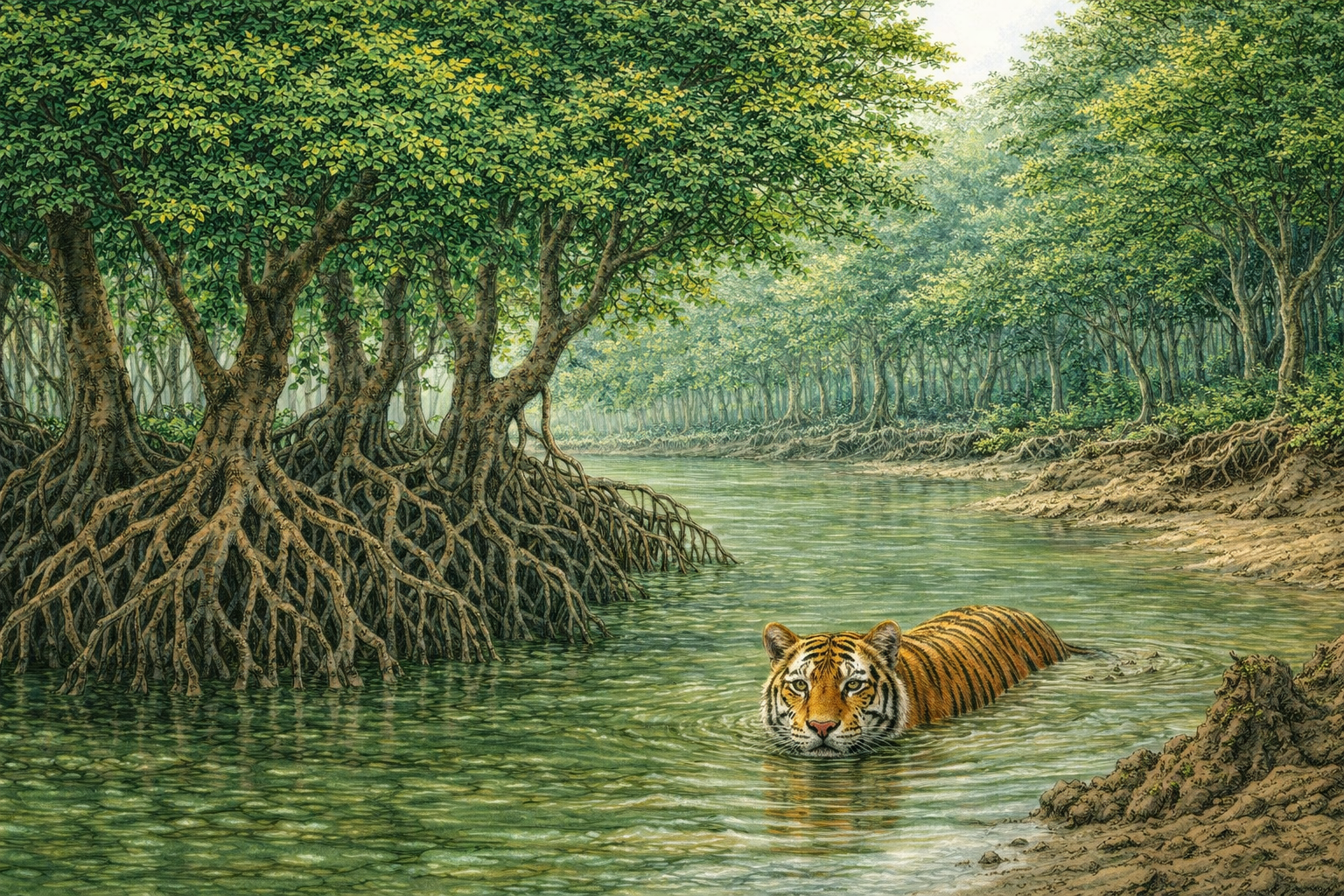
- Fauna: Royal Bengal Tiger is the famous animal. Turtles, Crocodiles,
Gharials, Snakes.
5. Wildlife
India has approximately 90,000 animal species and 2,000 species of birds.
- Elephants: Found in hot wet forests of Assam, Karnataka and Kerala.
- One-Horned Rhinoceros: Live in swampy and marshy lands of Assam and West Bengal.
- Wild Ass and Camels: Rann of Kuchchh and Thar Desert.
- Indian Bison, Nilgai (Blue Bull), Chousingha (Four-horned antelope): Found in
peninsular India.
- Lions: Gir Forest in Gujarat (Only home of Asiatic Lion).
- Tigers: Forests of MP, Sundarbans of West Bengal and Himalayas.
6. Conservation
Due to excessive exploitation, the ecosystem has been disturbed. Causes: Hunting (poaching), pollution,
deforestation.
Government Steps:
- Biosphere Reserves: 18 reserves have been set up. (e.g., Sundarbans, Nanda Devi, Gulf
of Mannar, Nilgiri, Nokrek, Great Nicobar, Manas, Simlipal, Dihang-Dibang, Dibru Saikhowa,
Agasthyamalai, Kanchenjunga, Pachmarhi, Achanakmar-Amarkantak).
- Financial and Technical Assistance: Provided to many Botanical Gardens since 1992.
- Project Tiger, Project Rhino, Project Great Indian Bustard: Eco-developmental projects
introduced.
- 103 National Parks, 535 Wildlife Sanctuaries: Setup to take care of natural heritage.
Q1: To which type of vegetation does rubber belong?
Ans: Tropical Evergreen.
Q2: Mention two factors affecting vegetation.
Ans: Relief (Land and Soil) and Climate (Temperature, Photoperiod, Precipitation).